
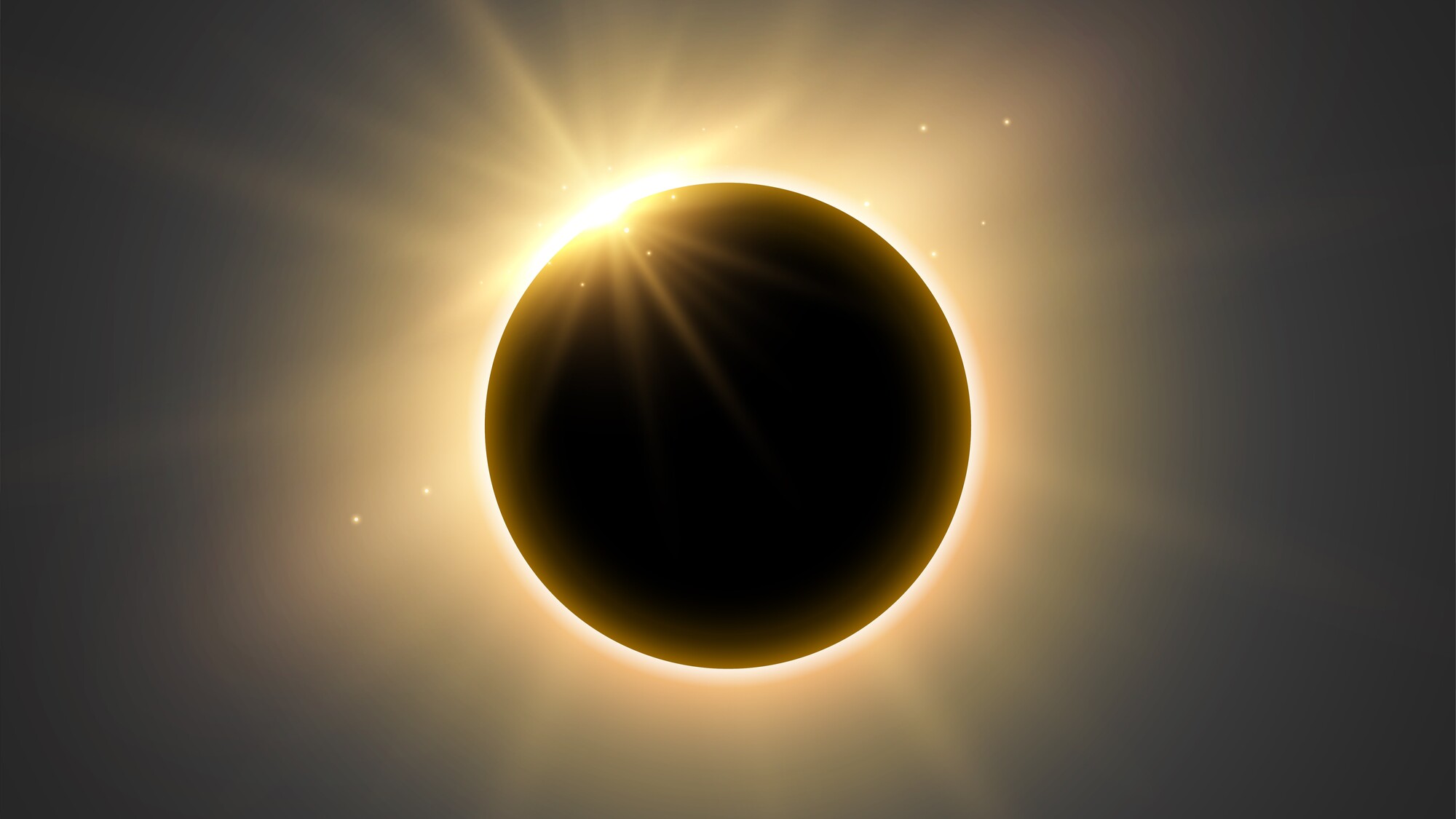
For the first time in nearly three decades, Europe is experiencing a total solar eclipse, marking a significant astronomical event that has captured the attention of millions across the continent. This rare celestial phenomenon, where the Moon passes directly between the Earth and the Sun, completely blocking out solar light for a brief period, represents one of nature’s most awe-inspiring spectacles. The last time Europeans witnessed such an event was in 1999, making this occurrence particularly special for astronomers and casual observers alike.
A dedicated live stream is providing continuous observation of the Sun and the eclipse’s progression through professional telescopes, showcasing all major phases of this remarkable phenomenon. Viewers around the world can witness the gradual obscuration of the Sun, the breathtaking moments of totality when the solar corona becomes visible, and the subsequent reemergence of sunlight—all from the comfort of their homes or mobile devices.
Understanding the Science Behind Solar Eclipses
Solar eclipses occur when the Moon’s orbit brings it directly between Earth and the Sun, casting a shadow on our planet’s surface. What makes total solar eclipses particularly rare is the precise alignment required: the Moon must be at the correct distance from Earth to appear exactly the same size as the Sun in our sky. This cosmic coincidence is unique to our planet in the known solar system. The Moon’s orbit is slightly elliptical, meaning its distance from Earth varies, which is why not every eclipse produces totality—some result in partial or annular eclipses instead.
During totality, the sky darkens dramatically, temperatures can drop noticeably, and the Sun’s corona—its outer atmosphere—becomes visible as a ghostly white halo surrounding the blackened disk of the Moon. This brief window, lasting only minutes at most, provides scientists with invaluable opportunities to study the Sun’s atmosphere, which is otherwise invisible against the overwhelming brightness of the solar surface. Birds may return to their roosts, confused by the sudden darkness, while other animals exhibit unusual behavior typically reserved for nighttime.
Historical Significance of European Solar Eclipses
The 1999 total solar eclipse that crossed Europe remains vivid in the memories of those who witnessed it. That event swept across the continent from Cornwall in England through France, Germany, Austria, Hungary, and Romania, with millions gathering along the path of totality. Major cities like Munich and Stuttgart saw the sky darken in midday, and the event sparked renewed public interest in astronomy. Historically, solar eclipses have played crucial roles in scientific discovery—most notably, the 1919 eclipse that provided evidence for Einstein’s theory of general relativity by demonstrating that light bends around massive objects like the Sun.
Ancient civilizations often interpreted solar eclipses as divine omens or supernatural events. The ancient Greeks were among the first to understand the astronomical mechanics behind eclipses, with Thales of Miletus reportedly predicting an eclipse in 585 BCE. Throughout medieval Europe, eclipses were frequently associated with impending disasters or the displeasure of divine forces. Today, these events are celebrated as opportunities for scientific research and public engagement with astronomy, with schools, observatories, and science centers organizing viewing parties and educational programs.
Viewing Safety and Best Practices
Experts consistently emphasize the critical importance of proper eye protection when observing any solar eclipse. Looking directly at the Sun without certified eclipse glasses or appropriate solar filters can cause permanent eye damage within seconds. Regular sunglasses, regardless of how dark they appear, provide absolutely no protection against the intense solar radiation. Only during the brief moments of complete totality—when the Moon entirely covers the Sun—is it safe to view without protection, and observers must immediately replace their eye protection as soon as any portion of the Sun reappears.
For those unable to witness the eclipse in person, the live stream coverage offers an excellent alternative, with telescopes equipped with specialized solar filters capturing unprecedented detail. These broadcasts often include expert commentary explaining each phase of the eclipse, making them valuable educational resources. The next total solar eclipse visible from parts of Europe is not expected for several more years, underscoring the significance of this current event for the continent’s skywatchers and scientific community.
Expert Opinion: This eclipse represents a pivotal moment for European astronomy outreach, potentially inspiring a new generation of scientists just as the 1999 eclipse did. The combination of modern streaming technology and widespread telescope access means more people will experience totality than ever before in human history. Future eclipses visible from Europe, including one expected in 2026 over Spain and Iceland, will benefit from the infrastructure and public interest generated by this event.